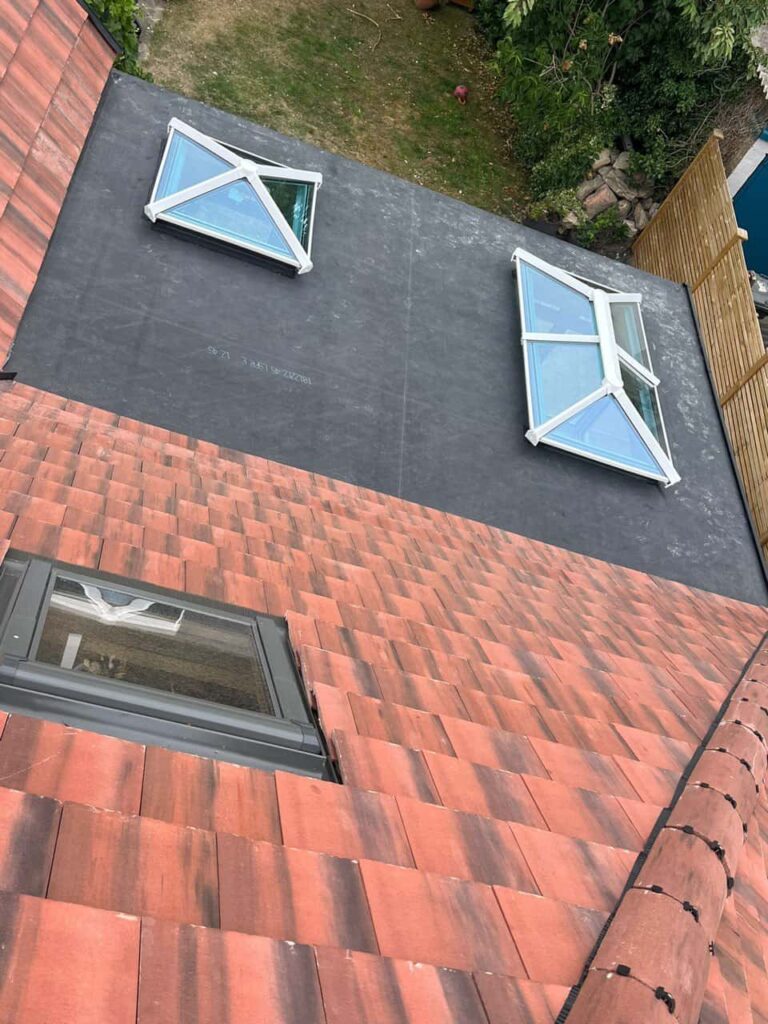
Flat roofs are widely used on residential and commercial properties because they provide a practical and space-efficient roofing solution. However, like any roofing system, they require proper maintenance and timely repairs to ensure they continue to perform reliably. Over time, certain issues can develop that affect the waterproofing and structural performance of the roof.
At Stafford Roofing Repairs, we regularly help property owners in Stafford, Staffordshire address common flat roof problems such as blisters, splits and pooling water. Understanding these issues can help homeowners recognise early warning signs and take action before the damage becomes more extensive.
Understanding Blisters on Flat Roofs
Blisters appear as raised bubbles or pockets on the surface of the roofing material. They occur when air or moisture becomes trapped beneath the outer layer of the roofing membrane.
This can happen for several reasons, including:
- Moisture trapped during installation
- Gradual deterioration of older roofing materials
- Temperature changes causing expansion and contraction
While small blisters may initially appear harmless, they can weaken the surface of the roof over time. If the blister ruptures, it may expose the underlying layers to water penetration. Professional assessment is important to determine whether the blister requires repair or reinforcement to maintain the roof’s protective barrier.
Why Splits Develop in Flat Roofing
Splits are cracks or separations in the roofing membrane that can develop as materials age or experience repeated thermal movement. Flat roofing materials expand during warm conditions and contract when temperatures drop. Over many cycles, this movement can lead to stress within the membrane.
Common areas where splits may occur include:
- Around roof joints
- Along seams or edges
- Near roof penetrations such as vents or pipes
Even small splits can allow water to enter the roof structure, potentially affecting insulation and internal ceilings. Prompt repair ensures the waterproofing system remains intact and prevents further deterioration.
The Impact of Pooling Water
Pooling water, sometimes referred to as standing water, occurs when rainwater remains on the roof surface for extended periods rather than draining away effectively.
Flat roofs are designed with slight gradients to encourage water runoff, but issues such as surface depressions, blocked drainage outlets or gradual structural settling can interrupt this process.
When water remains on the roof for too long, it can:
- Place additional stress on roofing materials
- Increase the likelihood of leaks
- Accelerate the deterioration of the membrane
Identifying the cause of pooling water is essential. Professional roofing contractors can assess the drainage system and determine whether repairs or surface adjustments are needed to restore effective water flow.
Why Early Repairs Are Important
Flat roof issues rarely resolve themselves. Blisters may expand, splits may widen and pooling water can gradually weaken the surface of the roof. Addressing these problems early helps protect the entire roofing structure and prevents more extensive repairs in the future.
A well-maintained flat roof should provide reliable protection against weather conditions, but this relies on timely inspections and professional repair work when necessary.
The Value of Professional Flat Roof Repair
Flat roofing systems require specialist knowledge to repair correctly. Each material type, whether felt, liquid coating or other membrane systems, requires the appropriate repair techniques to maintain waterproof integrity.
At Stafford Roofing Repairs, we carry out thorough inspections of flat roofs across Stafford, Staffordshire. Our team identifies the source of problems such as blisters, splits and drainage issues before recommending the most suitable repair approach.
By addressing the underlying cause rather than just the visible symptom, we help ensure the roof continues to perform effectively.
Conclusion
Blisters, splits and pooling water are among the most common issues affecting flat roofs. While they may begin as minor imperfections, they can quickly develop into more serious problems if left untreated. Understanding these warning signs allows property owners to take action before the roof’s protective function is compromised.
For property owners in Stafford, Staffordshire who are concerned about the condition of their flat roof, Stafford Roofing Repairs provides professional inspections and reliable repair services. Contact our team to arrange an assessment and ensure your flat roofing system remains strong, secure and fully protected.
Call us on: 01785 904 494
Click here to find out more about Stafford Roofing Repairs
Click here to complete our contact form and see how we can help with your roofing needs.