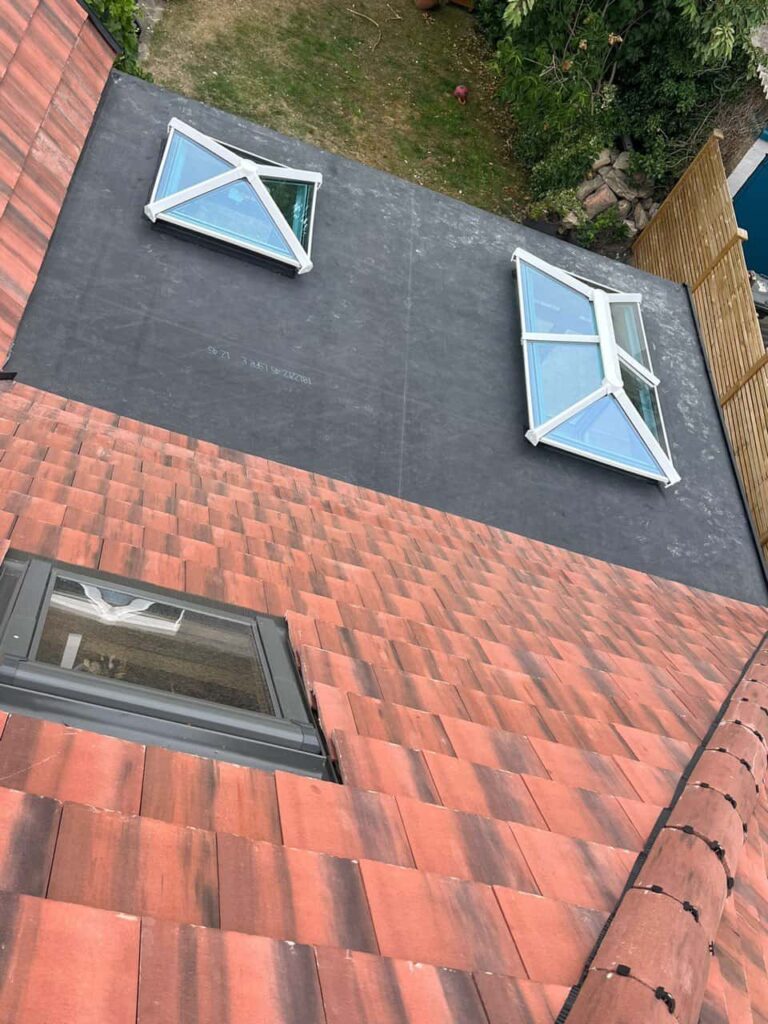
Roof tiles are designed to form a secure, overlapping covering that protects a property from rain, wind and changing weather conditions. When tiles move out of position, gaps can develop in the roof covering, leaving the underlying structure more vulnerable to water ingress and further damage.
Displaced tiles do not always result from a single incident. Ageing materials, deteriorating fixings, poor installation and exposure to strong winds can all contribute to movement over time. Recognising the common causes can help homeowners identify potential roofing problems before they become more serious.
For property owners in Stafford, Staffordshire, understanding why roof tiles become displaced is an important part of maintaining a weather-resistant roof.
Common Reasons Roof Tiles Move Out of Position
Strong Winds and Severe Weather
Strong winds are one of the most common reasons roof tiles become loose or displaced. Wind pressure can lift tiles, particularly along exposed roof edges, ridges and corners where the covering may experience greater force.
If a tile is already loose or its fixing has weakened, gusts can move it out of alignment or dislodge it completely. Heavy rainfall can then enter through the exposed section, potentially affecting the underlay, roof timbers and loft insulation.
After periods of particularly strong winds, it is worth looking for visible gaps, uneven tile lines or missing sections. Any inspection involving roof access should be left to a suitably equipped roofing professional.
Deteriorating or Corroded Roof Fixings
Many roof tiles are secured using nails, clips or other mechanical fixings. Over time, these components can deteriorate, particularly when exposed to moisture and changing temperatures.
Corroded fixings may lose their ability to hold tiles securely in place. As a result, individual tiles can begin to shift, lift or slide down the roof slope.
The problem may initially affect only a small section, but weakened fixings across a larger area can leave the roof increasingly vulnerable. Replacing defective fixings and securing affected tiles can help restore the stability of the covering.
Ageing and Damaged Roof Battens
Roof battens provide the horizontal support onto which tiles are fixed or hung. If these timber components become damaged through prolonged moisture exposure, decay or general ageing, their ability to support the tiles may be reduced.
Loose, split or deteriorating battens can cause tiles to lose their secure positioning. In some cases, the damage may remain hidden beneath the roof covering until tiles begin to move or slip.
A proper assessment should consider both the visible tile movement and the condition of the supporting battens to ensure the underlying cause is addressed.
Incorrect Installation
Roof tiles need to be installed with the correct overlap, alignment and fixing method for the particular roofing system. If tiles are incorrectly positioned or inadequately secured during installation, they may become unstable over time.
Incorrect spacing can also affect how the weight of the roof covering is distributed. This may create uneven sections where tiles are more likely to move under wind pressure or general weather exposure.
Professional installation and careful attention to the manufacturer’s fixing requirements help reduce the likelihood of premature tile displacement.
Roof Movement and Structural Changes
Buildings naturally experience small amounts of movement as materials respond to temperature changes, moisture and settlement. Although minor movement is not necessarily a cause for concern, changes affecting the roof structure can sometimes disturb the position of tiles.
Movement in rafters, battens or supporting components may alter the alignment of the roof covering. If this occurs, simply repositioning the displaced tiles may not provide a lasting solution.
The supporting structure should be checked where repeated tile movement suggests a wider problem.
Foot Traffic and Accidental Damage
Walking directly on roof tiles can place pressure on areas that are not designed to support concentrated weight. Some tile types are particularly vulnerable to cracking or breaking when stepped on incorrectly.
Damage may occur during maintenance work, inspections or the installation of other roof features. A cracked tile can subsequently move out of position or allow water to pass beneath the covering.
Using appropriate access equipment and safe working methods helps prevent unnecessary damage to the roof.
Warning Signs That Roof Tiles Have Moved
Displaced tiles are not always easy to identify from ground level, but certain signs may indicate a problem:
- Uneven lines or visible gaps between roof tiles.
- Tiles that appear raised, tilted or slipped downwards.
- Missing or cracked tiles.
- Pieces of broken roofing material on the ground.
- Damp patches or water staining inside the property.
- Repeated leaks affecting the same roof section.
If any of these signs appear, arranging a professional inspection can help establish the extent of the problem.
Why Prompt Roof Tile Repairs Are Important
A displaced tile can leave the roof vulnerable to rainwater, even when the affected area appears relatively small. If moisture reaches the underlay or roof structure, it may lead to damp insulation, timber deterioration and internal damage.
Stafford Roofing Repairs can help homeowners in Stafford, Staffordshire, identify the cause of loose or displaced roof tiles and carry out suitable repairs. Addressing the underlying issue, whether it involves damaged fixings, deteriorating battens or structural movement, is essential for restoring reliable protection.
Conclusion
Roof tiles can move out of position for several reasons, including strong winds, failing fixings, damaged battens, incorrect installation and movement within the roof structure. Identifying the cause is important because simply repositioning a tile may not resolve the problem if the supporting components are also affected.
For property owners in Stafford, Staffordshire, regular attention to roof condition can help prevent minor defects from developing into more extensive problems. If you have noticed loose, slipped or missing tiles, contact Stafford Roofing Repairs to arrange an assessment and discuss the appropriate repair work.
Call us on: 01785 904 494
Click here to find out more about Stafford Roofing Repairs
Click here to complete our contact form and see how we can help with your roofing needs.